Up to 15% Lower Energy Bills Start With Professional Attic Insulation
Your attic is most likely where most of your home’s heat is going. Maybe not. Probably. After 25 years of inspecting attics, that is the one thing we say with confidence.
Attic insulation is the material your home uses to slow heat movement between your living space and the roof above it. R value measures how well it does that. The Department of Energy recommends R 49 to R 60 for homes in this climate zone. Most older homes in New York and Connecticut we inspect are sitting somewhere around R 13 to R 22, and the gap between those numbers shows up on the energy bill every single month.
Signs You Need Attic Insulation
Here is something we see every week. A homeowner calls about high energy bills. They replaced the windows. They serviced the furnace. Nobody suggested looking at the attic.
Check your own home for these signs:
- Ice dams or icicles along the roof line. Snow on roofs melts unevenly, causing the escape of heat through the roof covering. That water refreezes at the eaves. None of it is a weather problem. It is an attic problem.
- Rooms that will not hold a steady temperature. One floor is too warm, another always cold; the system is running longer than it should. That pattern almost always traces back to the attic floor.
- Energy bills that keep climbing with no clear cause. If nothing in your home changed but your bills did, the attic is worth checking.
- Thin, patchy, or compressed insulation on the attic floor. Original material from the 1980s or 1990s settles and loses R value over time. What looks like insulation may not be performing like insulation anymore.
- Drafts near the attic hatch or recessed ceiling lights. Air is getting through; increasing the material above an air leak won’t prevent it.
If two or more of these are known, then most likely the insulation for the attic space is degraded, settled, or simply did not meet current requirements to start with.
Our Services
Experience the comfort and efficiency of high-performance insulation.
- Affordable Pricing
- Expert Technicians
- High-Quality Parts
- Free Diagnostics
- Convenient Service
- Same-Day Service
Types of Attic Insulation
(and Why We Only Install One)
Homeowners comparing types of attic insulation usually land on four materials. Here is how they compare.
Insulation Type | R Value per Inch | Seals Air Gaps | Best For |
Fiberglass batts | About 3 | No | Yes, plus moisture resistance |
Blown-in cellulose | About 3.5 | Partially | Open attics with no existing material |
Open cell spray foam | About 3.5 to 4 | Yes | Sound reduction and moderate climates |
Closed-cell spray foam | About 6 to 7 | Yes, plus moisture resistance | Older homes, cold winters, tight rafter spaces |
Here is what the table does not show. Fiberglass batts can reach R 30 on paper and still leave air moving freely around every seam and recessed light. Cellulose fills gaps better, but still does not form a true air barrier. Neither one addresses air movement, which is often the actual reason two similar homes feel so different from each other come winter.
The closed-cell spray foam addresses both problems and is the ideal attic insulation for cold-climate housing. More thermal resistance at less thickness than any other common insulating material at R 6 – R 7 per inch. The foam is a tight, impervious layer that the air cannot breach and repels moisture, important in a place where it doesn’t get cold enough in the winter to go after the air and humid enough in the summer to go after the moisture.
We have now entered our 25th year collaborating with all of the materials on this list, and we are now installing one: spray foam attic insulation. Not because it is the most expensive option. Because in this climate, it is the one that consistently delivers what homeowners are expecting.
What Happens During Your Attic Insulation Service?
No two attics are the same. That is the first thing we tell every homeowner, because it changes everything we do.
How the Process Works:
- Inspecting the Attic:This is always the critical first step. You have to get up there and see exactly what’s going on, how the air is flowing, where moisture might be hiding, and which specific trouble spots are making the rooms below uncomfortable.
- Removing the Old Insulation: Before putting anything new in, you have to get rid of the existing insulation, especially if it’s damaged, compressed, or just worn out. Starting with a clean slate is crucial for getting the best results.
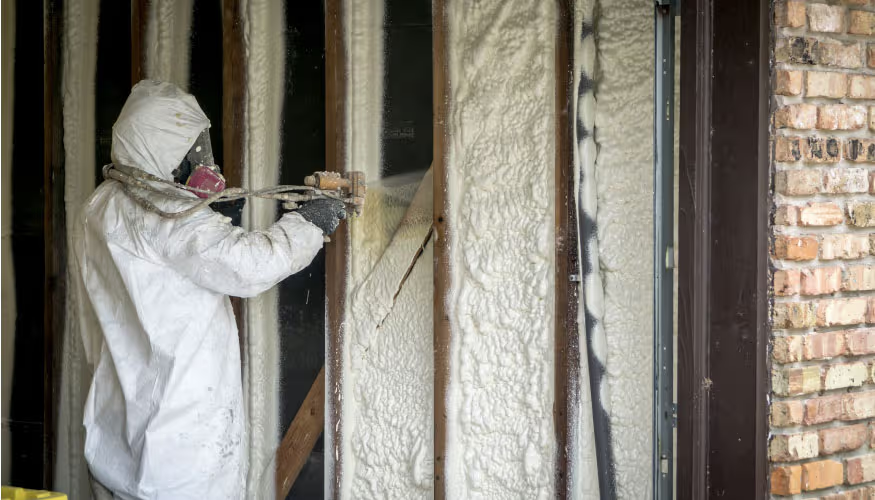
- Proper Ventilation and Full Protective Equipment: We start with the right setup and add full protective equipment before starting to apply foam. Spray foam is a two-component chemical system; we don’t rush or skip this step on any job.
- Foam Application and Cure: After applying the foam and after it has completely cured, we then walk you through what has changed and what to expect before we leave.
Why Do Homeowners in New York and Connecticut Trust Our Attic Insulation Work?
My name is Artem Markarian, and I have been doing this work for over 25 years alongside my business partner Sevi Kozak. We started this company because we kept watching crews show up, put material in, and leave without ever understanding what the attic actually needed.
Here is what we do differently:
- We Diagnose Before We Install: Two attics with the same square footage and the same age can behave completely differently because of how air moves through each one. We check that first before we touch anything.
- Twenty-Five Years of Real Field Experience: Cathedral ceilings, knee walls, active moisture problems, and previous insulation jobs done incorrectly. We have worked through all of it.
- Safety Comes First: Ventilation and protective equipment are critical when working with spray foam. Your family stays away from the workspace during that phase.
Most attic insulation companies look at thickness and get straight to work. We look at your specific attic first, because that is the step that usually decides whether the homeowner feels a real difference afterward.
Ready to Finally Take Control of Your Home Comfort?
If your home has been hard to heat or cool, if your bills keep climbing without a clear reason, or if your attic has not been properly looked at in years, start with an inspection.
We will come out, look at your attic properly, and tell you exactly what we see before any work is discussed. No pressure. No sales pitch. Just a straight answer from a team that has been getting this right for 25 years.
Call Eco Foam Insulation at (475) 208 0504 or consult our professional team to get started today.
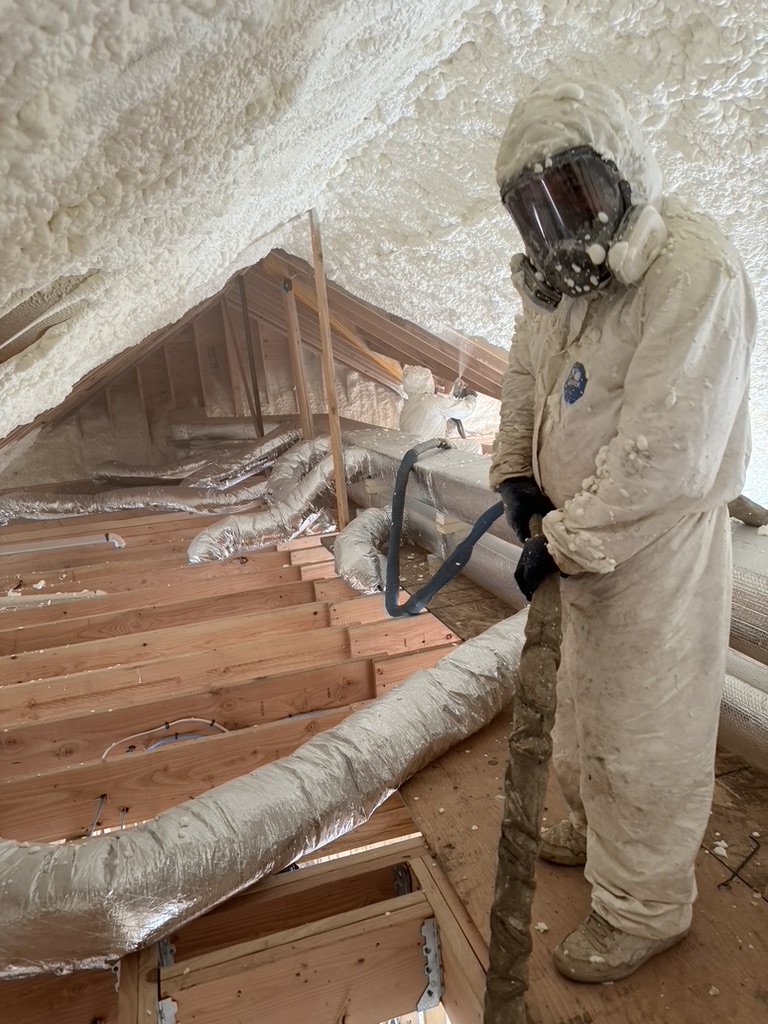
The best spray foam is closed-cell spray foam. Older construction is generally not regular in framing around pipes or wires, and batts have a hard time dealing with airflow patterns. The foam "seals" those spaces, forms an actual air seal and will not settle or compress over the years as fiberglass and cellulose would.
The lifetime of the home in most cases. Spray foam does not compress, does not settle, and does not absorb moisture the way fiberglass can. You install it correctly once, and it stays that way.
Yes, in most cases. Attic insulation removal is part of our standard process because the foam needs to bond directly to the attic surface. Old material underneath it compromises both the seal and the final result.
Completely safe once fully cured. During application, we set up proper ventilation and wear full protective gear. Your family is not near the workspace during that phase. By the time we clear the area, the foam is inert.
We look before we install. Most companies measure the square footage and get started. We study how your specific attic moves air and holds moisture first. That is the step that actually determines whether the job makes a real difference.