Old insulation doesn’t just fail after some time. It absorbs water gradually, and helps to retain mold spores secretly. Most homeowners will not realize anything is wrong until the odor, the bills or the allergies cannot be ignored.
Insulation removal and sanitization removes all the buildup in your attic, crawlspace or basement and treats every surface that’s left behind and makes your space ready for a clean upgrade. The Eco Foam Insulation does everything, so your home begins anew, rather than over a multitude of insulation issues.
Most homeowners in New York and Connecticut delay or put off recognizing the warning signs because they are so easy to ignore when they happen individually. If you notice more than one of these symptoms simultaneously, then it’s time for a professional evaluation, not another season of hoping for improvement.
If you have more than one of these applied, don’t delay a proper inspection.
One of the most popular quick fixes in renovation projects is adding extra insulation to the existing material, which usually does not yield better results. The rationale appears sound. Why remove everything if you can just add more on top?
The trouble is that mold, moisture, and rodent waste do not stop spreading just because something new sits above them. The mold spores continue to climb. The polluted matter continues to emit bacteria into the air that you and your family inhale. Whatever is underneath stays compressed, dragging down the performance of everything you just paid for.
There is also the air sealing problem nobody mentions. Removing old insulation is the only real chance to reach the gaps around pipes, wiring, and framing joints underneath. Skip that step, and your new insulation is still fighting air leaks it was never built to handle.
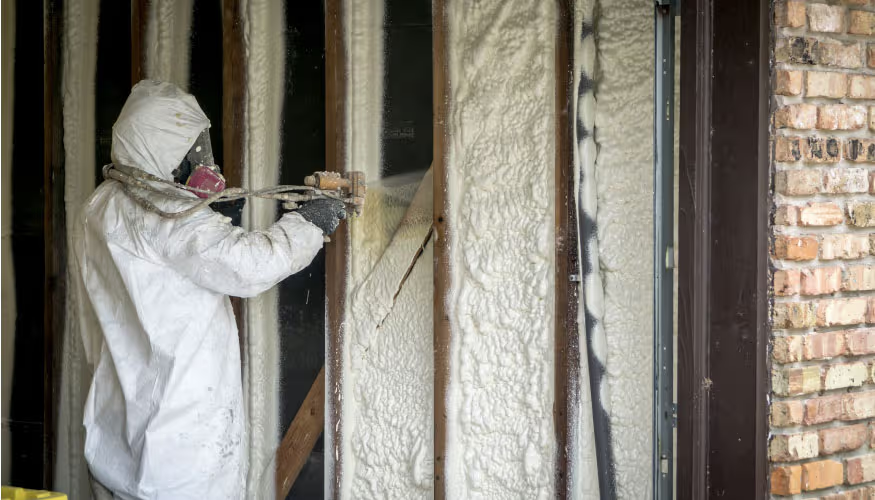
We treat every project as a complete restoration. Here is exactly what happens from the moment our crew arrives at your home no matter where you are : New York & Connecticut.
Twenty-five years of crawling through attics and basements across this region have shown us nearly every version of this problem. Rodent-damaged cellulose packed into century-old framing. Mold-soaked fiberglass in a basement with a vapor barrier that failed years ago. Spray foam that collapsed after a roof was redone without anyone checking what sat underneath.
This is what we do as a dedicated insulation removal company, full-time, with the equipment and training to handle contaminated spaces safely. We are not a pest control crew that handles insulation on the side.
Every job includes full containment, real sanitization, and a walkthrough afterward where we show you exactly what we found and why. No surprises halfway through.
Twenty-five years of crawling through attics and basements across this region have shown us nearly every version of this problem. Rodent-damaged cellulose packed into century-old framing. Mold-soaked fiberglass in a basement with a vapor barrier that failed years ago. Spray foam that collapsed after a roof was redone without anyone checking what sat underneath.
This is what we do as a dedicated insulation removal company, full-time, with the equipment and training to handle contaminated spaces safely. We are not a pest control crew that handles insulation on the side.
Every job includes full containment, real sanitization, and a walkthrough afterward where we show you exactly what we found and why. No surprises halfway through.
If you are seeing any of the signs above, the smartest move is getting a real inspection before the problem grows. Insulation removal and sanitization is not complicated when the crew doing it has the right equipment and knows what they are looking at.
Reach out to The Eco Foam Insulation for a free assessment. We will come to you and walk the attic, basement or crawlspace with you, and tell you what we see with no hidden surprises.
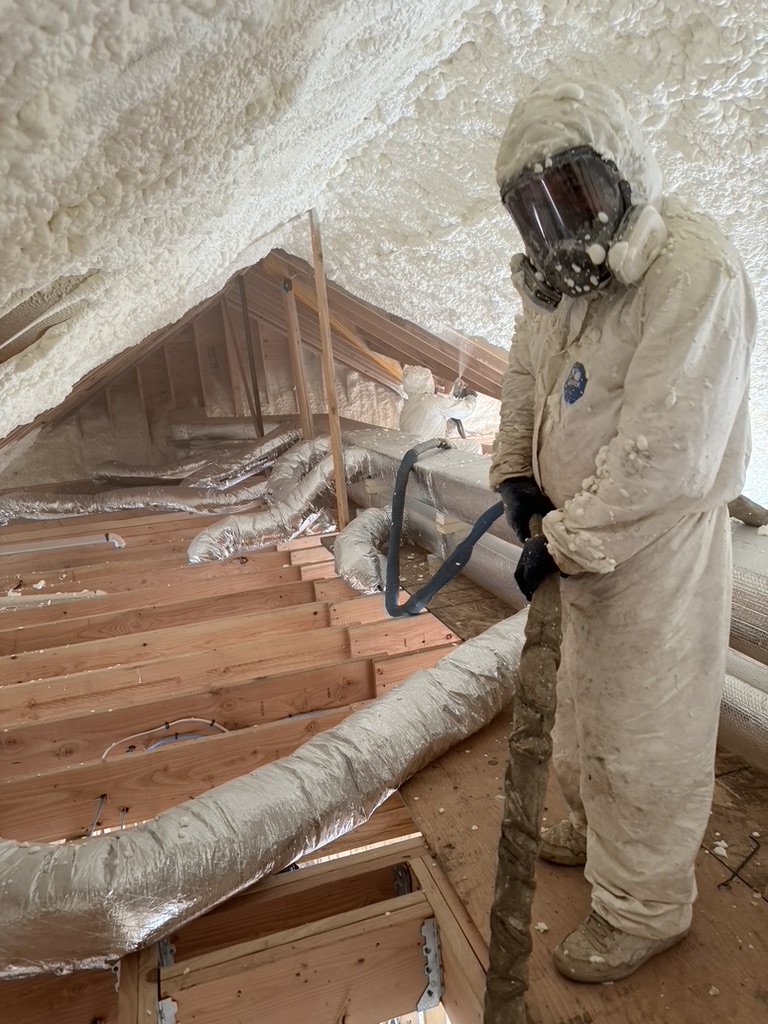
Most attic and crawlspace jobs take one to two days, depending on the size of the space and how contaminated it is. We confirm the exact timeline after the walkthrough.
Removal is physically taking the old material out of the space. Sanitization is the step after treating exposed surfaces with an EPA-registered product to kill off mold and bacteria.
Yes. As a foam insulation remover, we use tools built for foam bonded to wood and sheathing, not the standard equipment used for loose-fill insulation.
In the majority of cases, spray foam. It provides superior air-tightness over time, and does a better job of resisting moisture than fiberglass or cellulose.
Everything gets bagged on site and taken to a licensed facility. Clean material is sometimes recycled, but contaminated material goes through proper disposal procedures every time.