
Hot basement rooms, any time, regardless of how high you set the thermostat, are typically due to the basement. That old smell that crops up each spring, too. They are both a result of the same source: air and moisture freely moving through a portion of your home that was not tightly sealed.
The one thing we find that is consistent in basement and crawlspace insulation jobs, we’ve done for the past 25 years in thousands of homes. The person who constructed the house did it as an after-thought. Perhaps they simply installed fiberglass batts between the floor joists and considered the installation complete.
The fix isn’t more fiberglass. It’s the correct material at the correct time. With the proper seal for the first time, meaning you don’t have to battle it every season.
They both are positioned under your living space and both come into contact with moist ground, and when treated as a crawl space, it equals mold. Conventional insulation materials such as fiberglass are not very effective here, since they are a spongy absorber of water from below ground.
Let’s see how spray foam addresses each unique space’s problem quickly:
Feature | Basements | Crawl Spaces |
The Big Problem | Concrete walls sweat and wick up ground moisture. | Raw dirt floors release constant dampness and humidity. |
The Spray Foam Fix | Sprayed right onto bare concrete to block wetness and cold. | Seals rim joists and walls airtight over a ground barrier. |
Why It Wins Here | No hidden gaps behind drywall where mold can grow. | Fills tight, awkward framing that fiberglass can’t touch. |
There are three main goals of a good basement and crawl space insulation job and each one of these is important but more than many homeowners realize.
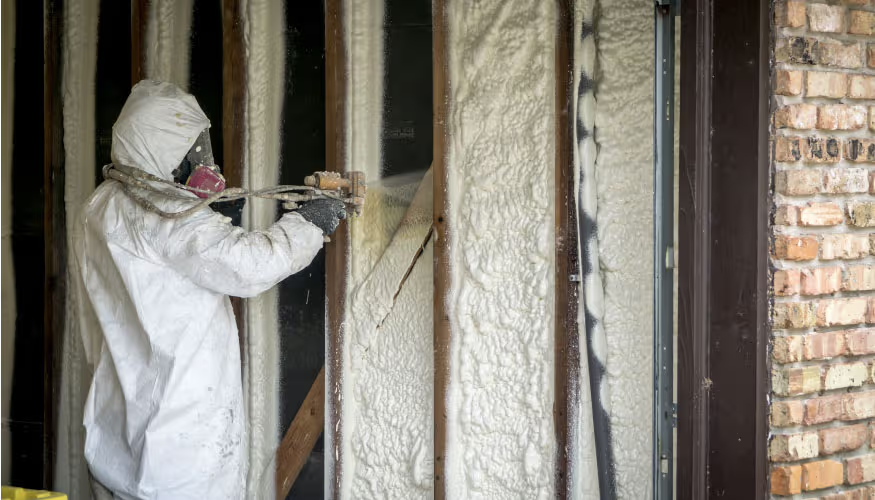
In the past, fiberglass batts were used on top of floor joists, or even attached to concrete walls. Those installs hardly ever last beyond 10 years. Fiberglass is water absorbing, will sag over time, and will encourage mold growth.
Closed-cell spray foam is not like that. Bonds permanently to concrete or wood, is not water absorbent and is an insulation and vapour barrier at the same time.
It’s similar for below-grade work:
Material | Works Against Concrete | Vapor Barrier | Lifespan in Basements |
Closed-cell spray foam | Yes | Yes | Lifetime of the home |
Fiberglass batts | No | No | 5 to 10 years before failure |
Rigid foam board | Yes (with sealed seams) | Yes | 30+ years |
Open cell spray foam | No | No | Not recommended below grade |
For the best basement insulation results in this climate, closed-cell is the choice almost every time. Rigid foam works too, but needs sealed seams, which adds labor and creates more failure points.
No one can quote your basement and crawlspace insulation over the phone, it all begins with a walkthrough. Here’s how it goes:
These steps are usually neglected by most spray foam contractors and they simply quote a price per square foot
When floors feel cold in winter, your basement is smelly, or your energy bills are climbing but you have no idea why, there’s a good chance that the answer is in the basement. We will walk through it, demonstrate what’s happening and explain the options before starting to discuss any work.
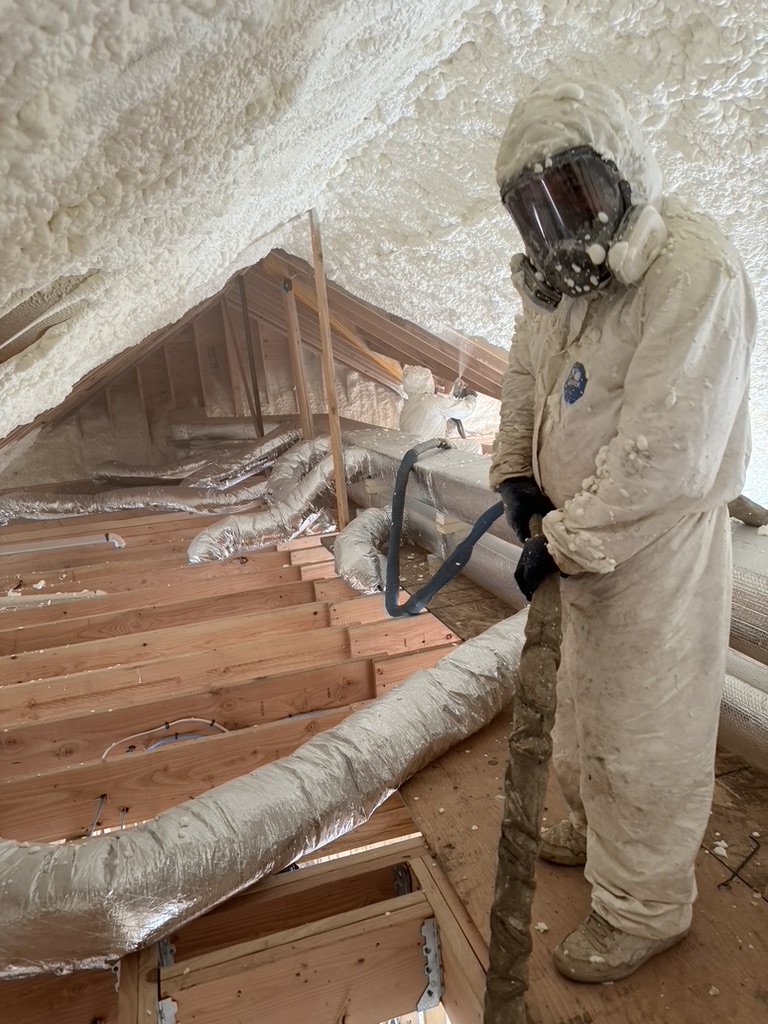
For a basement that won't be encapsulated, insulating basement ceiling joists with closed-cell spray foam works well since it air-seals at the same time it insulates. Avoid fiberglass batts here, since they sag and collect dust over time. This approach makes the floor above warmer but leaves the basement itself outside the conditioned envelope.
It depends on whether you use the basement. If it's purely storage and stays unconditioned, ceiling insulation makes sense. If you want a usable, comfortable basement, insulating the walls and rim joists brings the space inside your home's envelope and produces a much better result.
Crawl spaces are moisture-laden areas and fiberglass is moisture absorbent. The batts will sag and lose their R value in a few years and often mold will grow. On every crawl space that we encapsulate, we need to remove old fiberglass before we can encapsulate the space.
Yes, if it's done correctly. Sealing off the downstairs will help to eliminate the damp, moldy air that can be drawn up into your living areas, as up to 40 per cent of the air you breathe upstairs comes from the downstairs.